Glass has become an important part of modern homes, offices, schools, shops, and commercial interiors. It brings natural light into a space, makes rooms feel bigger, and gives interiors a clean, premium look. From windows and doors to partitions, railings, shower cubicles, tabletops, shelves, display counters, and office cabins, glass is used almost everywhere today.
But before selecting glass, one important question should be answered clearly: should you use toughened glass or normal glass?
Both have different purposes. Normal glass is suitable for simple, low-risk uses. Toughened glass is stronger, safer, and better for areas where people touch, push, lean on, or move near the glass regularly. Choosing the right type depends on safety, location, size, thickness, budget, and daily usage.
What Is Normal Glass?
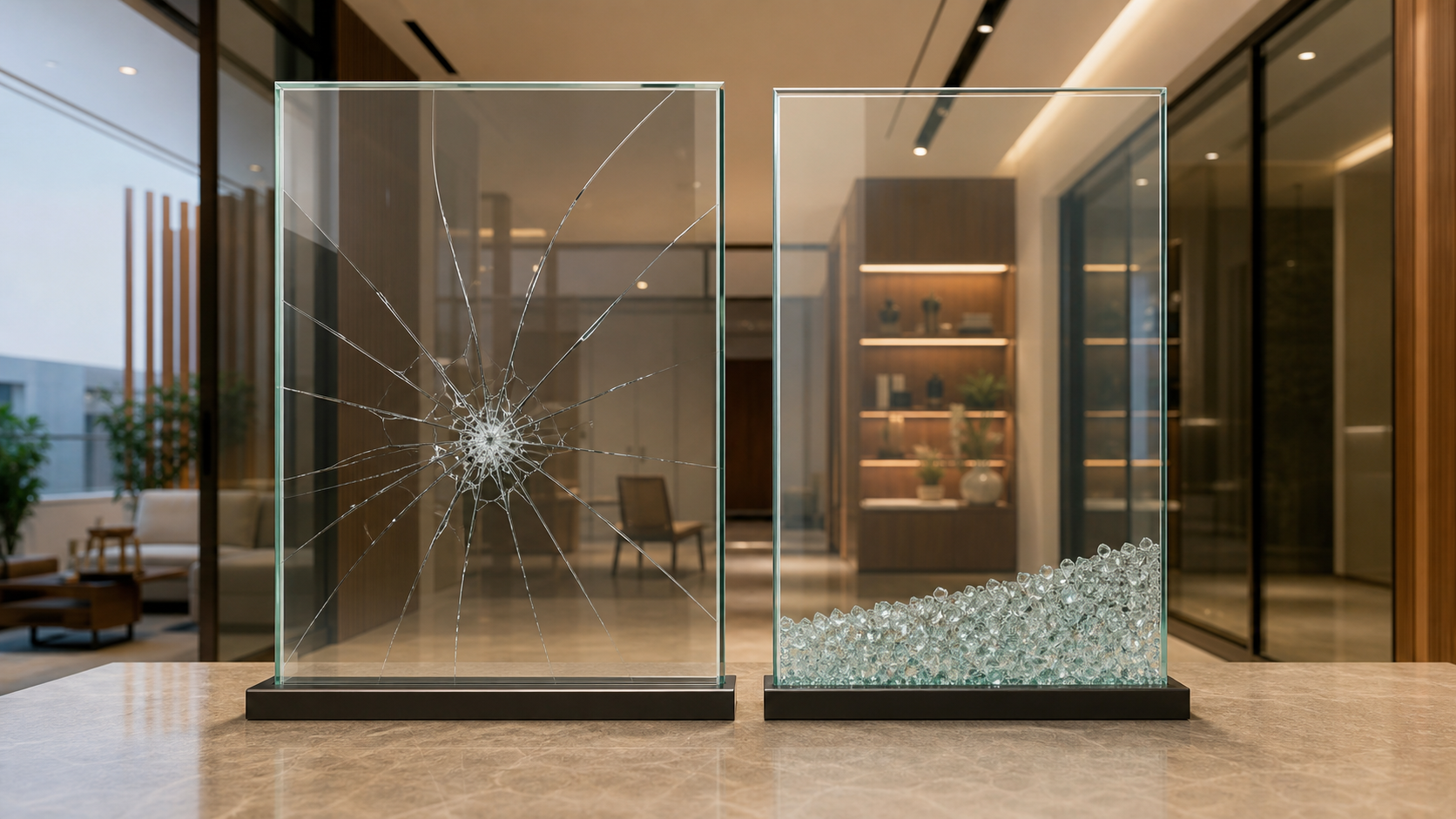
Normal glass, also called annealed glass, is the basic type of glass used in many everyday applications. It is made by heating raw materials and cooling the glass slowly. This gives it a smooth and clear surface, but it does not make it very strong against impact.
Normal glass is commonly used for small windows, photo frames, cabinet glass, simple shelves, decorative panels, low-risk indoor use, and small display areas.
The main advantage of normal glass is cost. It is usually more affordable than toughened glass. It can also be cut, drilled, polished, or resized more easily before installation.
The main disadvantage is safety. When normal glass breaks, it can break into sharp pieces. These sharp pieces can cause injury, especially in homes with children, schools, bathrooms, offices, shops, and busy spaces.
What Is Toughened Glass?
Toughened glass, also known as tempered glass, is a safety glass. It is made by heating normal glass to a high temperature and then cooling it quickly in a controlled way. This process makes the glass much stronger than regular glass.
Toughened glass is commonly used for glass doors, office partitions, shower cubicles, staircase railings, balcony railings, tabletops, shopfront glass, glass cabins, display counters, and commercial interiors.
The biggest benefit of toughened glass is safety. If it breaks, it usually breaks into small granular pieces instead of long sharp pieces. These small pieces are still glass and should be handled carefully, but they are much safer compared to broken normal glass.
Toughened Glass vs Normal Glass: Quick Comparison
| Feature | Normal Glass | Toughened Glass |
|---|---|---|
| Strength | Basic strength | Much stronger |
| Safety | Breaks into sharp pieces | Breaks into small blunt pieces |
| Cost | More affordable | Costs more |
| Cutting after making | Can be cut before installation | Cannot be cut after toughening |
| Best for | Small, fixed, low-risk areas | Doors, railings, partitions, bathrooms |
| Daily use | Limited contact areas | High-use and high-safety areas |
| Appearance | Clear and simple | Clear, premium, and strong |
Strength Difference
Toughened glass is much stronger than normal glass of the same thickness. It can handle more pressure, impact, and temperature changes. This makes it better for larger panels and places where the glass will be used daily.
For example, a small fixed window may work well with normal glass. But a glass door that people open and close every day should be made with toughened glass. Similarly, a railing, shower partition, or office cabin should not be planned with ordinary glass because safety is more important in those areas.
If people will touch, push, lean on, or walk close to the glass, toughened glass is usually the better choice.
Safety Difference
Safety is the biggest reason to choose toughened glass. Normal glass can break into long, sharp pieces. This is risky in bathrooms, balconies, doors, schools, offices, and commercial spaces. If normal glass breaks in a high-traffic area, it can cause serious injury.
Toughened glass is designed to reduce this risk. When it breaks, it breaks into small pieces. This makes it safer for families, children, senior citizens, students, staff, and customers.
For homes, schools, offices, shops, clinics, showrooms, and public-use areas, toughened glass is a smart and responsible choice.
Where Can You Use Normal Glass?
Normal glass can still be useful when the application is simple and safe. You can use it in places where the glass is fixed, smaller in size, and unlikely to face impact.
- Small window panes
- Photo frames
- Small cabinet shutters
- Decorative indoor panels
- Simple fixed shelves
- Low-height display areas
If budget is important and the glass will not face heavy use, normal glass may be enough. But it should not be used casually in places where safety matters.
Where Should You Use Toughened Glass?
Toughened glass should be used wherever safety, strength, and daily handling are important.
- Main glass doors
- Bathroom shower cubicles
- Office glass partitions
- Balcony glass panels
- Staircase railings
- Large fixed glass panels
- Shopfront glass
- Display counters
- Conference rooms
- Commercial cabins
For bathrooms, toughened glass is especially useful because it handles moisture, cleaning, movement, and daily use better. For railings and balconies, glass selection should be done very carefully based on height, panel size, support system, and safety needs.
Cost Difference
Normal glass is cheaper than toughened glass. For small and low-risk uses, it can be a budget-friendly option.
Toughened glass costs more because it goes through an extra heating and cooling process. It also needs accurate planning before manufacturing. Any holes, cutouts, edge polish, and final sizes must be decided before the glass is toughened.
However, for doors, railings, partitions, bathrooms, and commercial use, the extra cost is worth it. In these areas, glass should not be selected only by price. Safety, durability, correct thickness, and proper installation are more important.
Can Toughened Glass Be Cut Later?
No. Toughened glass cannot be cut, drilled, or resized after the toughening process. If someone tries to cut it, the glass may break completely.
This is why accurate measurement is very important. Before ordering toughened glass, the final size, shape, holes, cutouts, edge finish, and hardware placement should be confirmed.
Normal glass can be cut and modified more easily before installation. But for safety-focused applications, toughened glass is still the better choice.
Thickness Also Matters
Choosing between normal glass and toughened glass is only one part of the decision. Thickness is also important.
A small cabinet panel does not need the same thickness as a balcony railing or shower partition. A tabletop, office partition, or large door needs stronger glass and proper edge finishing.
The correct thickness depends on size of the glass, location, type of use, support system, hardware, safety requirement, and indoor or outdoor placement. Do not choose glass only by thickness or only by price. The right glass should match the actual application.
Hardware and Installation Matter
Good glass can fail if the hardware or installation is poor. Handles, hinges, channels, clamps, patch fittings, floor springs, seals, and support systems should match the glass type and usage.
For example, a toughened glass door needs good-quality fittings for smooth movement and long life. A shower cubicle needs proper seals and alignment to reduce water leakage. A railing needs strong support and correct fixing.
A good glass solution is not just the glass sheet. It is the combination of correct glass, correct thickness, accurate measurement, proper hardware, and clean installation.
Which Glass Should You Choose?
Choose normal glass if the area is low-risk, the glass is small and fixed, budget is the main concern, there is little chance of impact, or it is used for simple indoor decoration.
Choose toughened glass if safety is important, the glass is used daily, people walk or sit near it, it is used for doors, bathrooms, or railings, the panel is large, or it is for an office, school, showroom, or commercial space.
For most modern interiors, toughened glass is the better option wherever safety and durability matter.
FAQs
Is toughened glass completely unbreakable?
No. Toughened glass is stronger than normal glass, but it is not unbreakable. It can still break under very heavy impact or incorrect installation.
Is toughened glass good for bathrooms?
Yes. Toughened glass is commonly used for shower cubicles and bathroom partitions because it is safer and stronger for daily use.
Can normal glass be used for doors?
Normal glass is not recommended for doors. Glass doors face movement, pressure, and regular handling, so toughened glass is safer.
Is toughened glass more expensive?
Yes, toughened glass costs more than normal glass. But for safety-focused areas, the extra cost is usually worth it.
Final Thoughts
Both toughened glass and normal glass have their own uses. Normal glass is affordable and useful for simple, fixed, low-risk applications. Toughened glass is stronger, safer, and more suitable for modern homes, offices, schools, shops, bathrooms, railings, partitions, and commercial interiors.
For toughened glass in Chitradurga, normal glass, mirrors, glass partitions, shower cubicles, railings, tabletops, and interior glass solutions, Shree Thirumala Glass and Plywoods can help you choose the right glass type, thickness, hardware, and material combination for your project.